7 Reasons to Use EDI (Electronic Data Interchange) for Your Logistics
What is an EDI and How Does It Work
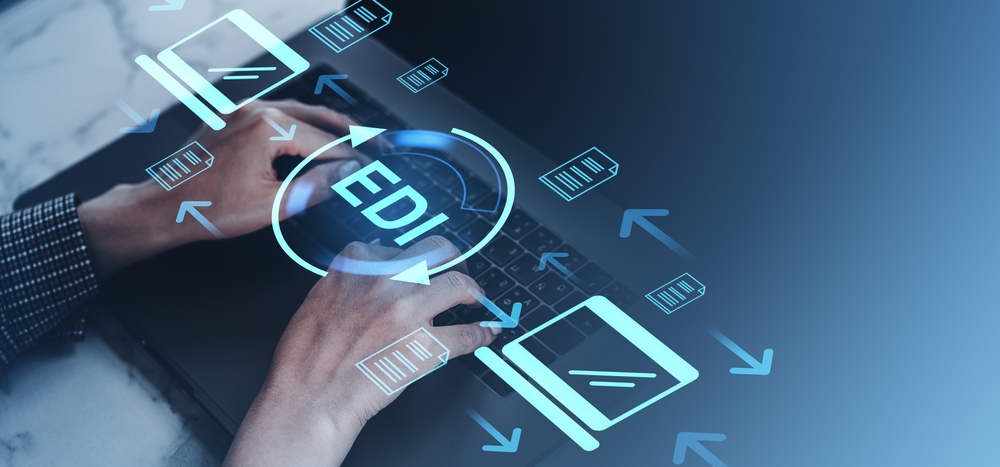
Electronic Data Interchange (EDI) is the automated exchange of business documents between your system and your logistics partner’s system without relying on email, phone calls, or fax. Instead of a team member manually entering order details, an EDI file moves directly from your ERP into the warehouse management system (WMS) and transportation management system (TMS). This process eliminates delays and reduces the chance of human error.
When an order is transmitted by EDI, it is created in real time across connected systems, ensuring the warehouse and carrier receive accurate instructions at the same moment you generate them. That same connection also works in reverse. Inventory updates, order confirmations, and shipment details flow back into your system as soon as actions are completed in the warehouse. If there is a short shipment, a hold, or a change in availability, you see it right away.
Because EDI uses industry standards such as ANSI X12, you and your partners can be confident that information is being transferred consistently and securely. Even smaller businesses that do not run full ERP integrations can still benefit by using flat file processes designed to match their requirements, with confirmations returned automatically.
Should You Adopt EDI? – Yes
If you want faster, more accurate, and more reliable communication with your logistics partners, you should adopt an EDI. Manual data entry, spreadsheets, and email-based orders are not sustainable when you are scaling your business or dealing with large customers and national retailers. These customers often require EDI integration as a condition of doing business. Without it, your orders risk rejection, delay, or penalties.
EDI adoption also allows you to process more orders each day without increasing labour. Once the file is transmitted, it becomes visible immediately in the system, which means the warehouse can start working on it within minutes. By contrast, waiting for someone to key in data introduces bottlenecks that slow down the flow of goods.
Moreover, an EDI sets you apart as a reliable partner. OEMs and retailers measure suppliers against strict performance standards. If you can confirm orders, update inventory, and provide shipment details electronically, you gain a competitive edge over businesses still relying on outdated processes.
Benefits of Using EDI for Your Logistics
Using an EDI in your logistics creates measurable improvements across order processing, cost control, inventory accuracy, and customer service. Instead of patching together manual systems or chasing down updates, you and your partners work from one consistent flow of information. The following seven benefits explain why EDI is one of the most effective tools available for modern supply chains.
Beyond efficiency, EDI helps you build credibility with customers who demand accuracy, speed, and compliance. Whether you are supplying an OEM plant, a retailer with strict delivery windows, or a distributor managing thousands of SKUs, EDI keeps your business running without interruptions. Below are seven clear reasons why adopting EDI will strengthen your logistics.
1. Faster and More Accurate Order Processing
EDI speeds up order processing by transmitting instructions in real time between your systems and your logistics provider. When you send an order, it appears instantly in the WMS and TMS, ready for picking, packing, and shipping. This removes the lag created by email or phone calls, and it eliminates the errors that come from retyping data.
Accuracy improves because there is no duplicate entry or manual handling. If a product is unavailable or on hold, the system alerts you immediately, so you can make adjustments before the shipment leaves the warehouse. Faster order processing also means your customers receive goods sooner, and you can handle last-minute requests with less disruption.
2. Cost Savings Across the Supply Chain
Reducing labour costs is one of the most direct advantages of EDI. Manual order entry, error correction, and repeated communication take time and resources. With EDI, your team spends less time re-entering data and fixing mistakes, and more time on activities that add value.
Cost savings also appear in transportation. A connected WMS and TMS can batch shipments heading to the same location, plan efficient routes, and avoid duplicate entries. This improves load utilization and cuts unnecessary freight costs. Over time, the reduction in administrative overhead and shipping inefficiencies leads to a lower cost per order.
3. Improved Inventory Visibility and Control
EDI gives you a live view of your inventory, helping you make better decisions about purchasing, replenishment, and order promises. Every time stock moves in or out of the warehouse, updates are sent back to your system. This keeps your data current and avoids situations where you sell items that are already out of stock.
Better visibility also improves control. You can see holds, quarantined items, and lot information as they occur. If a product is recalled or blocked due to a quality issue, that status flows through EDI immediately, so you do not risk shipping defective goods. For businesses managing high SKU counts, this level of control is essential for accuracy and trust.
4. Compliance with Your Customers
Large customers and national retailers often require EDI as a standard. They do not want to chase suppliers for confirmations or rely on paper documents. If you cannot transmit data through EDI, you risk order rejection, financial penalties, or even losing the account.
An EDI ensures you meet compliance requirements, whether that involves specific order formats, shipment notifications, or labelling standards. For example, if an OEM needs delivery updates tied directly to their production line schedules, EDI provides those updates instantly. For retailers, EDI helps you align with their narrow delivery windows and prevents costly chargebacks.
5. Enhanced Shipment Tracking and Logistics Coordination
EDI strengthens your ability to track shipments and coordinate logistics activities. Instead of calling a warehouse or waiting for a status email, you receive shipment confirmations, carrier details, and exceptions directly into your system. This reduces uncertainty and gives your team the information needed to keep customers informed.
Coordination improves because EDI connects your WMS and TMS, allowing orders to be grouped, routed, and shipped more effectively. Carriers receive complete and accurate data, cutting down on mis-shipments and delays. If there is an issue with a load, the system communicates it right away, so you can respond before it escalates.
6. Scalability for Business Growth
As your order volume grows, manual processes become unmanageable. EDI gives you the ability to scale without adding equal amounts of labour. The system can handle thousands of orders per day, processing them consistently without fatigue or error.
Scalability is not just about handling more orders. EDI also makes it easier to onboard new customers, vendors, or carriers who already use EDI standards. Instead of building one-off processes for each partner, you connect to them through a format that is widely recognized across industries. This allows you to grow while keeping operations streamlined.
7. Better Customer Satisfaction
Ultimately, EDI improves the experience you deliver to your customers. Orders are processed quickly, inventory data is accurate, shipments are tracked in real time, and compliance requirements are met without extra effort. This reliability gives your customers confidence in your ability to deliver.
When customers see that they can place orders and receive confirmations instantly, they are more likely to trust you with larger volumes and longer contracts. Meeting strict OEM and retailer requirements also strengthens your reputation and positions you as a dependable partner in competitive markets.
By adopting EDI, you gain a logistics process that is faster, more accurate, and more resilient than manual systems. Each of these seven benefits ties directly to improved efficiency, lower costs, and stronger customer relationships. For business owners and operations managers, EDI is not just a technical upgrade—it is a tool that directly supports growth and long-term stability.
PiVAL is a 3PL and We Have EDI Compatibility
At PiVAL, we know that speed, accuracy, and compliance drive your success. That is why our systems are fully EDI compatible and integrated with our warehouse and transportation platforms. Whether you need real-time order processing, seamless inventory updates, or strict compliance with OEM and retailer requirements, we can support you.
If you are ready to simplify your logistics and give your customers the service they expect, reach out to PiVAL. Our team can show you how EDI integration with a trusted 3PL will keep your supply chain running smoothly and position your business for growth.
PiVAL specializes in:
- Automotive Parts and Tires (OE & RE)
- Retail Suppliers
- Manufacturing
- Pulp & Paper
- Construction Sites
Our warehouses are located in:
- Montreal
- Toronto
- Guelph
- Vancouver